English
▼
Press ESC to close

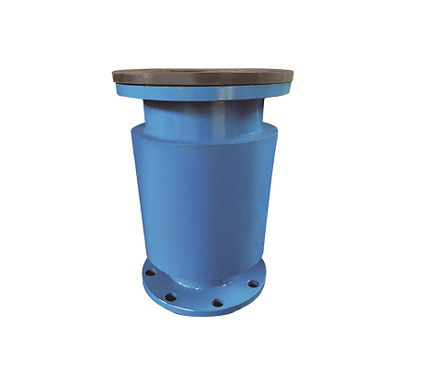
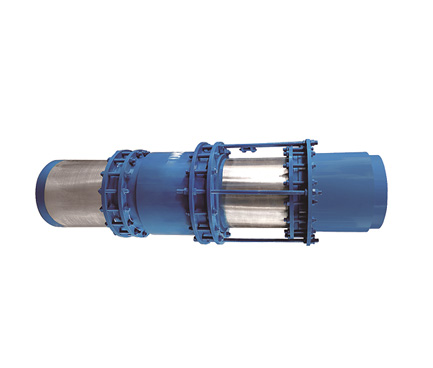
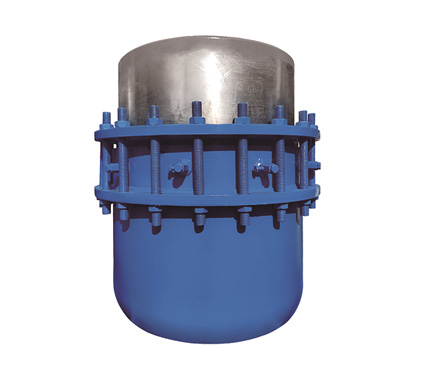
Maintenance-free rotary expansion compensator: composed of a reducer tube, inner sleeve, sealing seat outer sleeve, flexible graphite packing, nut bolts, N compression spring combinations, packing gland, and spring clamping flange: A compression spring is provided between the packing clamping flange and the upper compression flange, and the compression flange has a U-shaped longitudinal cross-section of a groove ring.
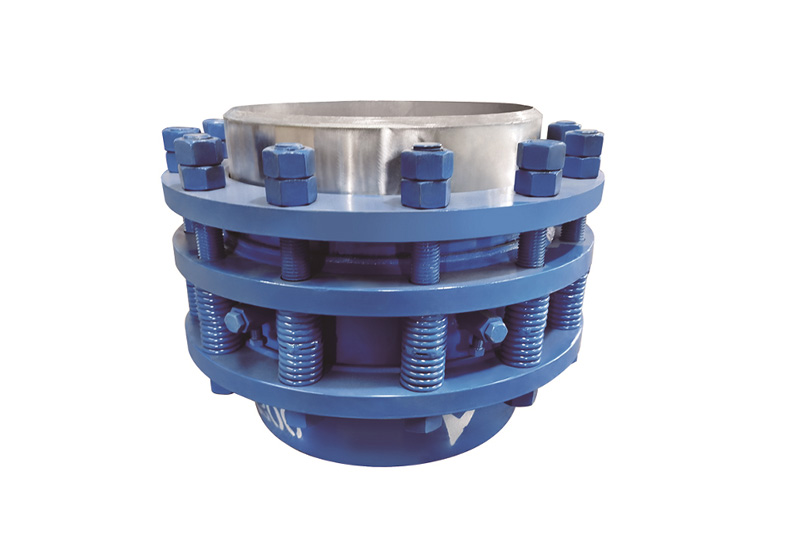
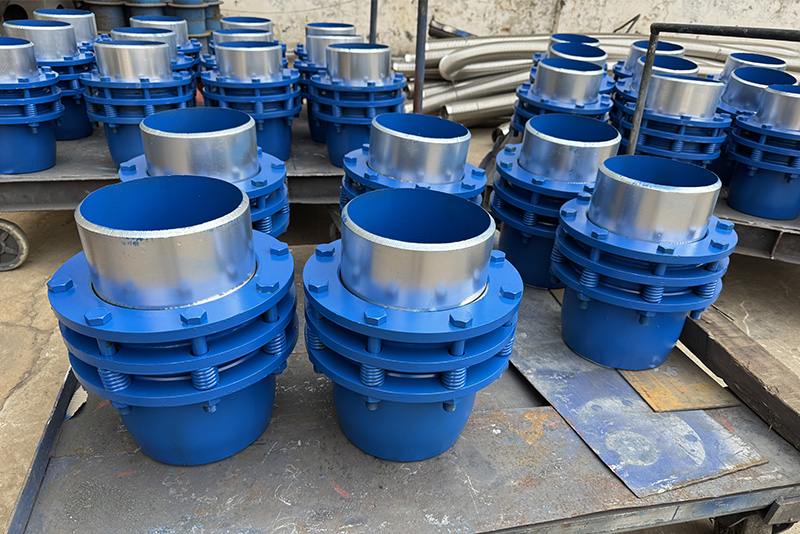
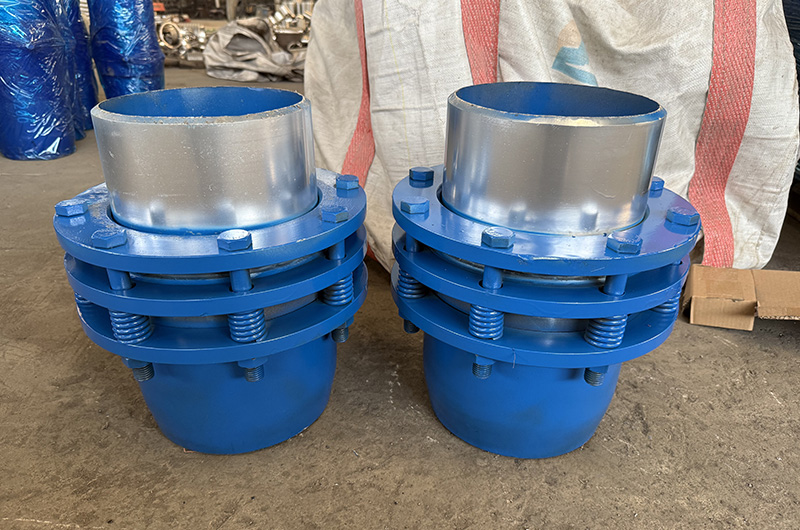
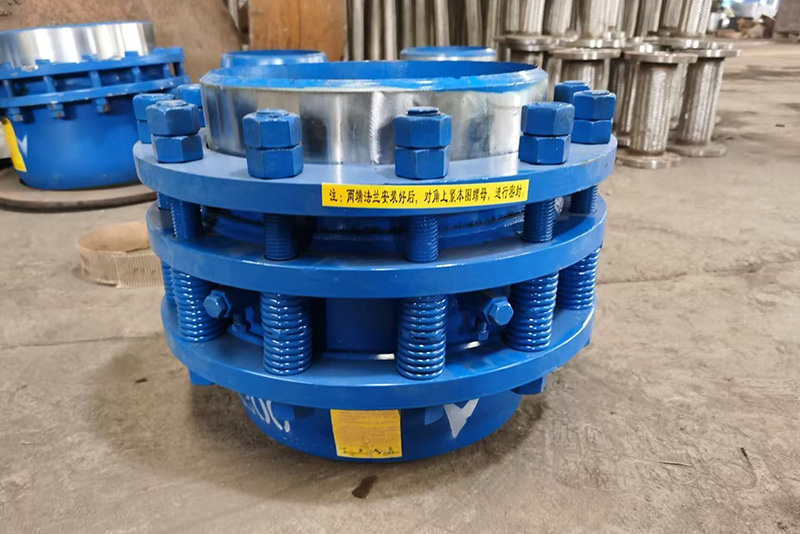
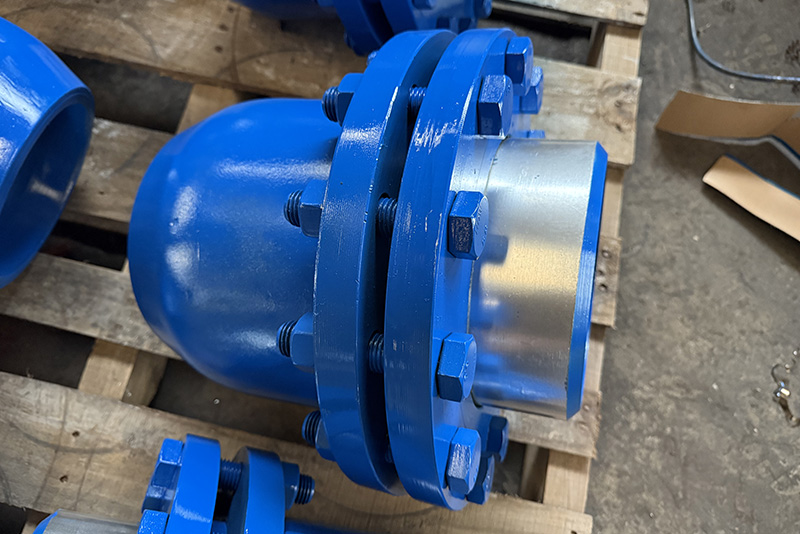
Maintenance-free rotary expansion compensator: composed of a reducer tube, inner sleeve, sealing seat outer sleeve, flexible graphite packing, nut bolts, N compression spring combinations, packing gland, and spring clamping flange: A compression spring is provided between the packing clamping flange and the upper compression flange, and the compression flange has a U-shaped longitudinal cross-section of a groove ring.
Between the two fixed rings on the right end face of the inner conduit and the U-shaped groove, a ball-type rolling ring is provided to coordinate with the reducer pipe.
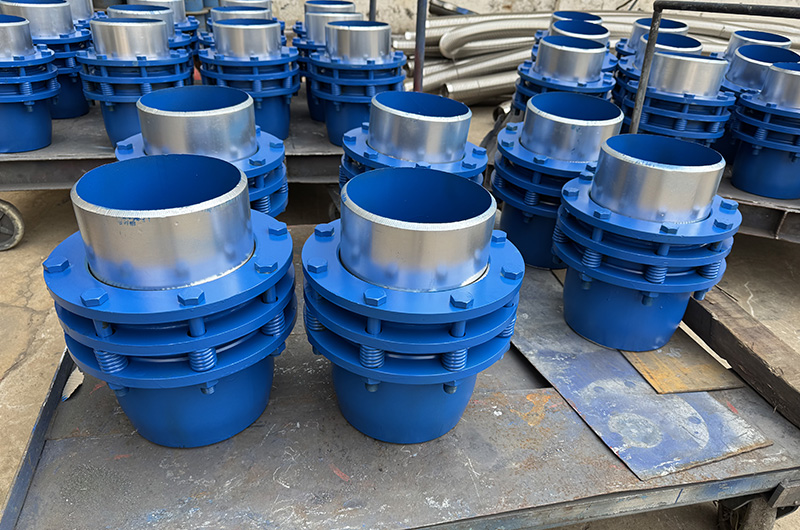
Exceptionally large compensation: A single group covers 200–500m of pipe sections, which is 3–5 times that of corrugated pipes.
No internal pressure thrust: Fixed bracket cost reduced by 70%, no need for strong brackets.
High pressure and high temperature resistance: PN 0.6–4.0MPa, temperature -40°C~450°C, suitable for steam/hot water.
Reliable sealing: radial graphite sealing, zero leakage, maintenance-free lifespan of 20 years.
Flexible layout: can be directly buried or overhead, suitable for complex terrain, bends, or height drop pipe sections.
No risk of instability: No bellows fatigue, resistant to water hammer and vibration.
When the pipeline undergoes thermal expansion and contraction generating axial thrust, the paired rotating cylinders rotate through the lever arm (similar to a lever), converting linear displacement into angular rotation to absorb heat and elongate; No internal pressure thrust, so the fixed bracket bears minimal stress.
The maintenance-free rotation expansion joint is sealed by the flexible packing inside the packing chamber. During use, the packing wears out slightly with each rotation. Because a set of springs is added above the packing compression flange, when the packing experiences slight wear, the tension of the compression spring compensates, thereby extending the time for leakage (leakage delayed by 3-5 years).
When the wear exceeds the spring tension compensation amount, simply tighten the nut above the spring compression flange, without the need for gas shutdown for repair. There is no limit to the number of runs and leakage is less likely, greatly improving the social and economic benefits of both gas supply and gas users.
The maintenance-free rotary expansion joint uses a sealing material to be molded using a press, with a density requirement that is not too dense to maintain plasticity.
Then, N rings of this packing ring (according to product requirements) are placed into the packing chamber, some oxidation-delaying components are added, and a hydraulic press is used to perform secondary molding under certain pressure (the hydraulic press surpasses manual wrench techniques in both force and uniformity), fusing the packing rings into one unit, thereby increasing the packing density, improving sealing performance, and ensuring the product is leak-free for 15-20 years.
1. Long-distance urban thermal/steam pipeline networks (straight pipe sections above 200m).
2. High-temperature, high-pressure steam pipelines for power plants, petrochemicals, and metallurgy.
3. Mountainous or complex terrain pipelines, bends, and elevation differences to replace multiple sets of bellows expansion joints.
4. Compensation for direct-buried/overhead pipelines, pump room inlets and outlets, settlement joints.
1. Paired installation: pairs (∏ type/Ω type), with bidirectional compensation for straight pipe sections.
2. Support setup: Fixed brackets spaced 200–500m apart, equipped with guide brackets to prevent flexion.
3. Flow direction: No directional restrictions, can be installed horizontally, vertically, or buried.
4. Maintenance: Maintenance-free; regularly check the seal for leaks.
| serial number | name | quantity | Material |
| 1 | Ontology | 1 | Q235 |
| 2 | Anti-friction centering bearing | 2 | Q235 |
| 3 | Sealing gland | 1 | Q235 |
| 4 | sealing material | 1 | graphite seal |
| 5 | Pressure bolt | 1 | Q235 |
| 6 | Sealing seat | 1 | Q235 |
| 7 | Big and small heads | 1 | Q235 |
| 8 | spring | n | Q235 |
| Maintenance-free rotary compensators and rotary compensators both rely on flexible packing within the stuffing box for sealing. During use, the packing wears down with each rotation, and when the wear reaches a certain level, leakage occurs. Thrust-free maintenance-free rotary compensator: Consists of a reducing pipe, inner sleeve, sealing seat outer sleeve, flexible graphite packing, nuts and bolts, N spring combinations, a packing gland, and a spring-loaded clamping flange. A spring is installed between the packing gland and the upper clamping flange. The clamping flange has a U-shaped groove in its longitudinal section. Ball-type rolling rings that cooperate with the reducing pipe are located in the U-shaped groove and between the two fixed rings on the right end face of the inner guide tube. I. Structural Difference: Rotary compensator: Consists of a reducing pipe, inner sleeve, sealing seat outer sleeve, flexible graphite packing, nuts and bolts, spring combinations, and a packing gland, and is equipped with corresponding ball bearings. II. Difference in Working Principle:Both maintenance-free rotary compensators and rotary compensators rely on flexible packing within the packing cavity for sealing. During use, each rotation causes slight wear on the packing, and when this wear reaches a certain level, leakage occurs. Rotary compensators require shutting down the heating network, removing the packing flange, adding more packing, and then tightening the flange again to resume operation. In contrast, the maintenance-free rotary compensator incorporates a spring above the packing flange. When the packing experiences minor wear, the spring tension compensates, extending the time before leakage (by 3-5 years). When the wear exceeds the spring tension compensation, simply tightening the nut on the spring-loaded flange resolves the issue without shutting down the gas supply. It has no operational limit, is less prone to leakage, and significantly improves the socio-economic benefits for both gas suppliers and consumers. This product can compensate for 5000 times at 4.0 MPa without leakage, demonstrating superior sealing performance. III. Differences in Manufacturing Process: Rotary compensators are made by machining standard sealing ring parts and then tightening the packing with a wrench to secure the flange nuts. The drawbacks are: the standard sealing ring parts already have a certain density, resulting in poor plasticity. The sealing rings cannot fit tightly together, easily forming gaps in between. The sealing elements cannot form a cohesive unit within the packing cavity. Furthermore, insufficient wrench force prevents the packing from forming a unified structure, thus reducing the product's sealing performance. Steam or hot water can cause oxidation and penetration of the packing, easily leading to leaks.The maintenance-free rotary compensator first uses a press to mold the sealing material, requiring a relatively low density while maintaining plasticity. Then, N packing rings (the number depends on product requirements) are placed into the packing cavity, and some oxidation-retarding components are added. A second molding process is then performed using a hydraulic press under certain pressure (the hydraulic press surpasses manual wrench molding in terms of force and uniformity), fusing the packing rings together to increase the packing density, improve sealing performance, and ensure the product remains leak-free for 15-20 years. |
|||
| serial number | Nominal diameter DN | Interface size D | Maximum external dimensions D1 | Product length L |
| 1 | 50 | 57 | 142 | 225 |
| 2 | 80 | 89 | 190 | 250 |
| 3 | 100 | 108 | 220 | 250 |
| 4 | 125 | 133 | 240 | 280 |
| 5 | 150 | 159 | 275 | 280 |
| 6 | 200 | 219 | 335 | 300 |
| 7 | 250 | 273 | 395 | 300 |
| 8 | 300 | 325 | 450 | 350 |
| 9 | 350 | 377 | 510 | 350 |
| 10 | 400 | 426 | 560 | 350 |
| 11 | 450 | 480 | 610 | 380 |
| 12 | 500 | 530 | 670 | 380 |
| 13 | 600 | 630 | 760 | 400 |